MERC’s Draft Renewable Energy Regulations: Why On-Site Battery Storage Remains a Strategic Investment
Maharashtra’s proposed energy banking framework could reshape solar power economics, but Battery Energy Storage Systems (BESS) continue to offer significant advantages for commercial and industrial consumers.
The Maharashtra Electricity Regulatory Commission (MERC) has proposed a new regulatory framework for renewable energy banking and energy storage, introducing changes that could influence how businesses manage solar power generation, electricity consumption and energy costs.
Under the draft regulations, renewable energy consumers would be able to bank surplus electricity with the grid and adjust it against consumption during different time slots, subject to applicable charges and conditions. For consumers on time-of-day tariffs, the proposed mechanism prioritises adjustment against higher-tariff periods.
While this could offer a cost-effective alternative to installing batteries solely for shifting surplus solar energy, it does not eliminate the broader value of on-site Battery Energy Storage Systems (BESS).
Understanding the Proposed Banking Framework
The draft introduces fixed and variable banking and standby charges, with the variable component linked to energy storage costs.
However, the final charges have not yet been notified, leaving uncertainty around the long-term economics of grid-based energy banking.
Businesses will need to consider potential changes in banking charges, future tariff structures and the impact of fixed monthly costs when evaluating their energy strategies.
Why On-Site Battery Storage Still Makes Business Sense
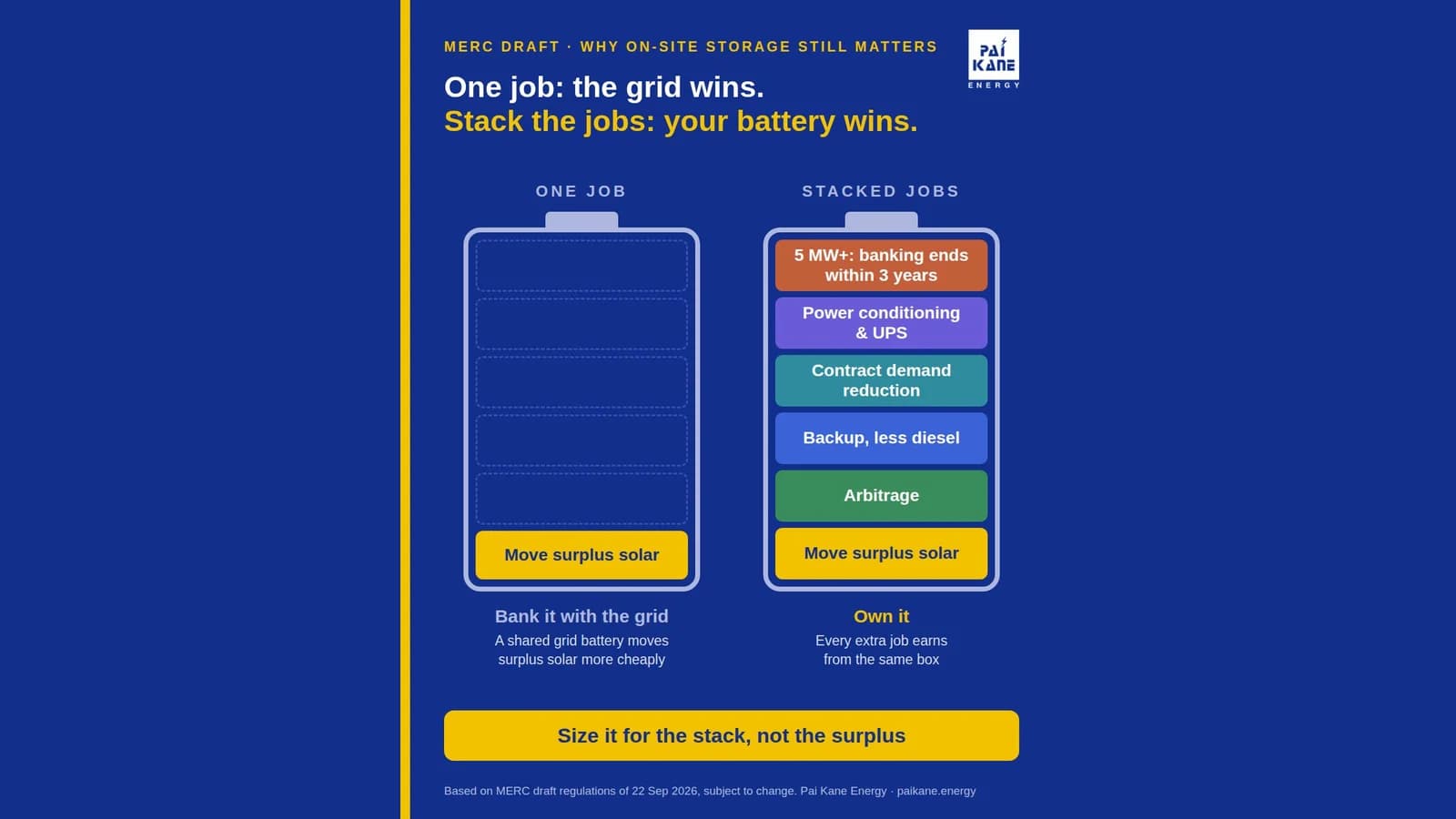
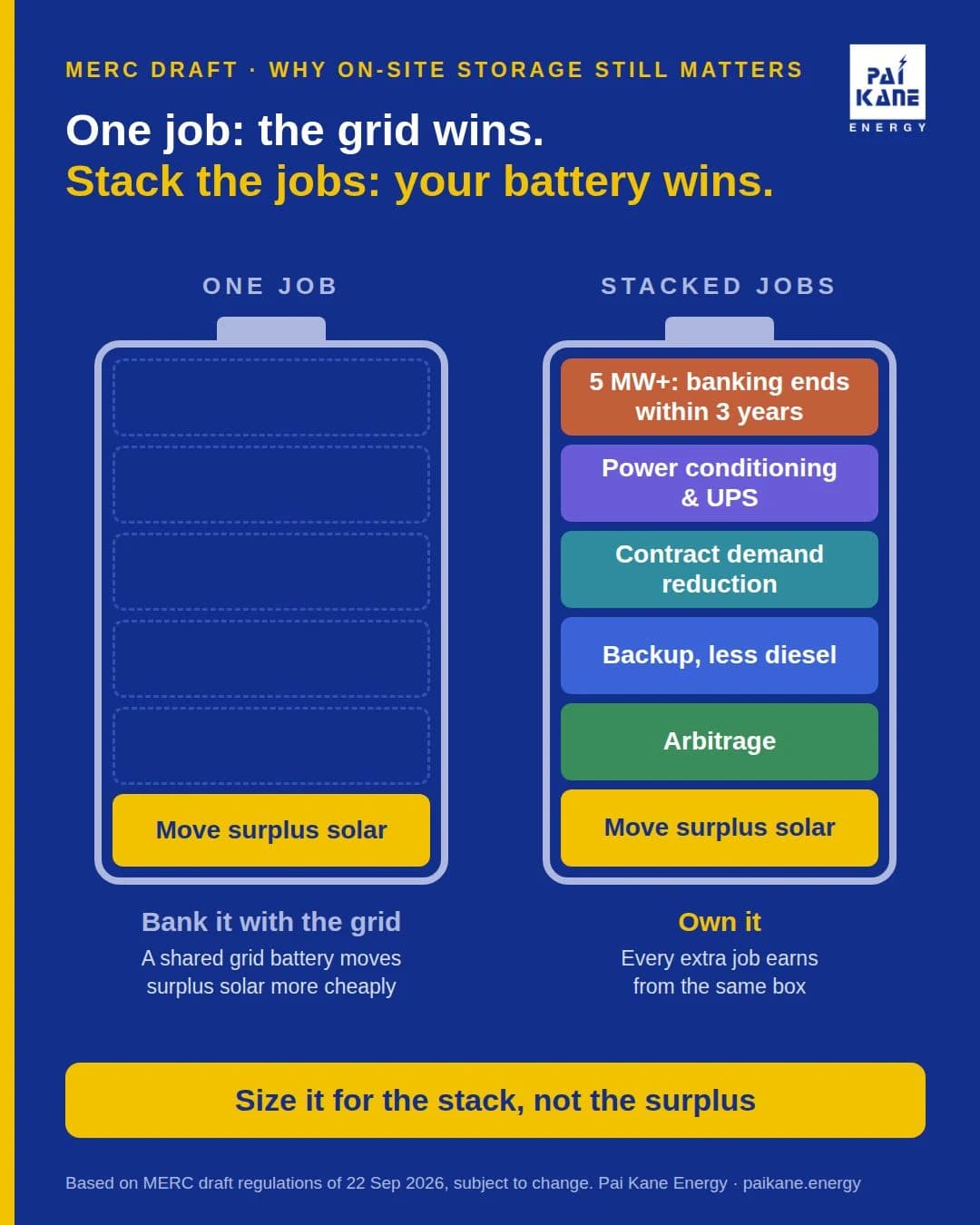
Unlike grid-based banking, which primarily facilitates energy accounting and adjustment, an on-site BESS can deliver multiple operational and financial benefits.
Peak Demand Management: Stored energy can be discharged during high-demand periods, potentially reducing peak grid draw and associated electricity costs.
Energy Cost Optimisation: Batteries can store electricity during lower-cost periods and discharge it when grid tariffs are higher.
Backup Power Support: BESS can provide backup power during grid interruptions, helping reduce dependence on diesel generators, subject to system design and available storage capacity.
Contract Demand Optimisation: Strategically deployed storage can help businesses manage maximum demand and potentially optimise contracted power requirements.
Power Quality and Continuity: When integrated with appropriate power electronics and controls, BESS can support voltage management and critical-load continuity.
Improved Solar Utilisation: Excess solar generation can be stored and used when required, increasing self-consumption and reducing reliance on grid electricity.
Implications for Large Renewable Energy Consumers
The proposed framework also introduces changes for consumers with contracted renewable energy capacity exceeding 5 MW, including a transition towards 15-minute scheduling within three years of notification.
These developments could make on-site energy storage increasingly relevant for larger industrial facilities seeking greater control over energy consumption and grid dependence.
The Future Is in Integrated Energy Management
The financial viability of BESS should not be assessed solely on the amount of surplus solar energy available.
Instead, businesses should evaluate the combined benefits of peak shaving, energy arbitrage, backup power, demand management and renewable energy integration.
A properly sized BESS can perform several functions within a single installation, potentially creating greater long-term value than a system designed exclusively for storing excess solar generation.
As Maharashtra’s renewable energy regulatory landscape evolves, businesses will benefit from adopting a comprehensive approach to energy planning.
The key is not simply to store surplus energy, but to maximise the value of every unit generated and consumed.
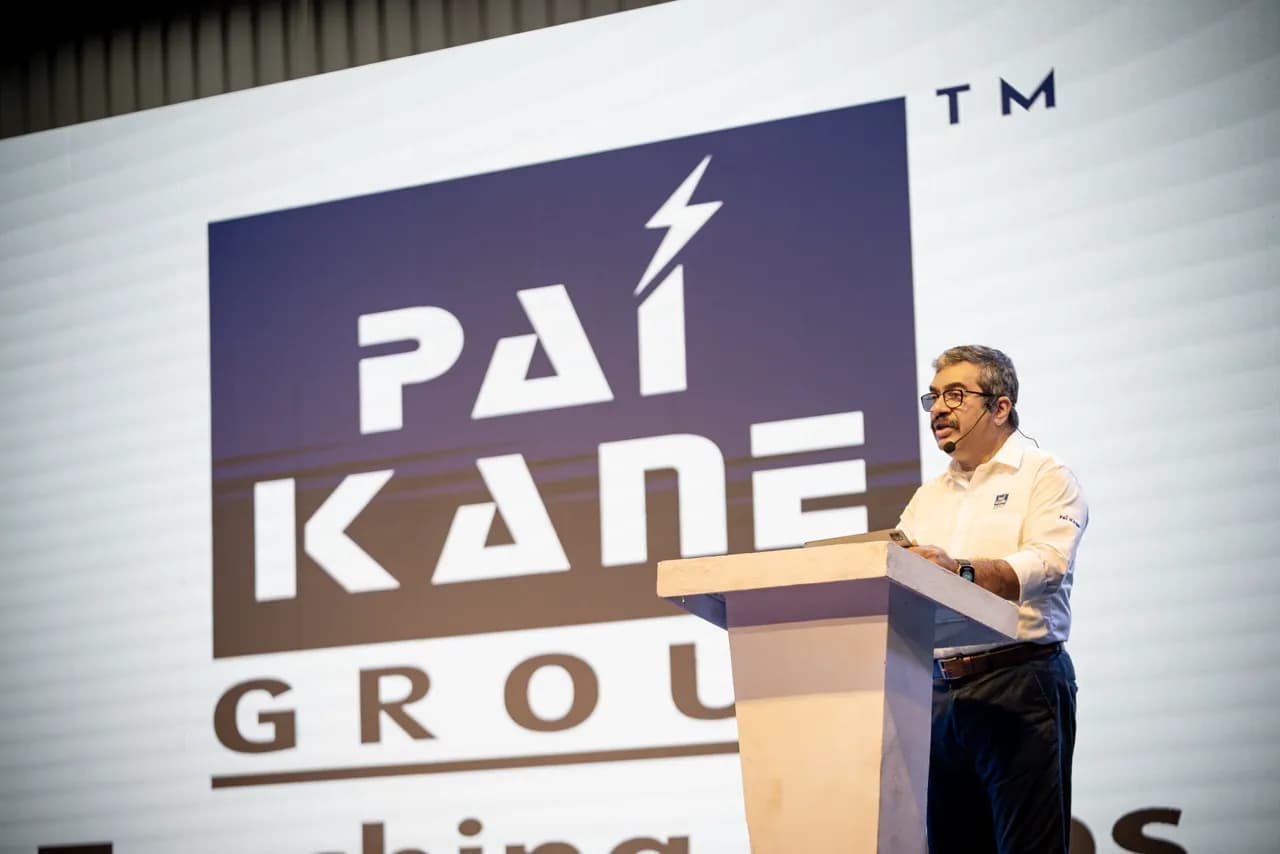
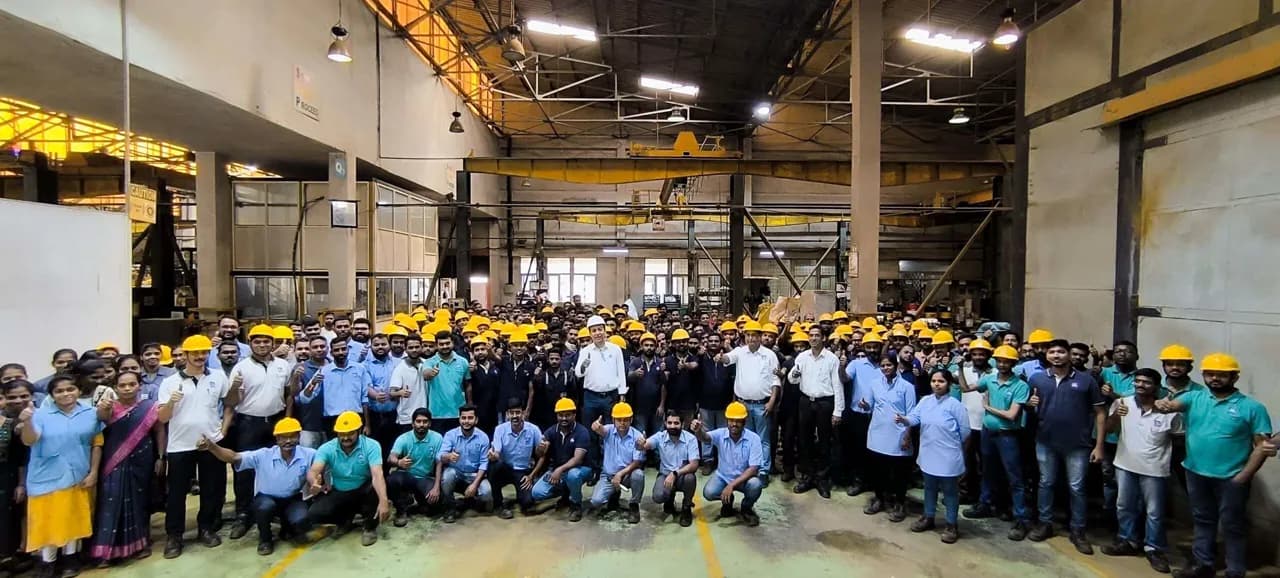
At Pai Kane Group, our focus on integrated power and energy solutions, including Battery Energy Storage Systems, solar power and conventional power generation, supports the evolving energy requirements of commercial and industrial consumers.
With the right combination of technologies, businesses can move towards greater energy efficiency, reliability and long-term sustainability.